Demand documented verification and validation checkpoints at every stage of your solar installation—from initial site assessment through final commissioning—to protect your investment from the costly design flaws and performance gaps that plague nearly 30% of residential solar systems within their first three years.
Evaluate your solar provider’s engineering approach by requesting their system design documentation, performance modeling methodology, and quality assurance protocols. Companies employing V systems engineering follow a rigorous verification framework where each design decision undergoes parallel testing and validation, ensuring your solar array will deliver promised energy production rather than falling short by 15-40% like systems designed through conventional methods.
Insist on seeing real-world performance data from completed installations matching your property characteristics and energy needs. V-model engineering creates traceable documentation linking initial requirements to final system performance, giving you concrete evidence that your specific solar solution has been tested against your actual consumption patterns, roof geometry, and shading conditions. This systematic approach eliminates the guesswork and optimistic projections that leave homeowners disappointed when their first utility bill arrives.
Recognize that V systems engineering represents fundamental methodology borrowed from aerospace and automotive industries, now applied to solar installations by forward-thinking providers. This structured approach divides your project into distinct phases—requirements analysis, high-level design, detailed design, implementation, and testing—with each phase verified against your stated goals before proceeding. When your installer can show you this disciplined process in action, you gain assurance that your 25-year solar investment has been engineered for reliability, not just assembled from standard components. The methodology transforms solar installation from a construction project into a precision-engineered energy solution tailored to maximize your financial returns and environmental impact.
What V Systems Engineering Really Means for Your Solar Project
When you’re investing in a solar installation, you want confidence that every component will work together flawlessly for decades. That’s where V systems engineering becomes your safeguard. This methodology takes its name from the V-shaped diagram that maps the entire engineering process, creating a systematic approach that’s particularly valuable for complex solar projects.
Think of the V-model as a mirror image of your project’s journey. On the left side of the V, your project begins with broad system requirements at the top—your energy goals, budget constraints, and site specifications—then flows downward through increasingly detailed design phases. Engineers break down your solar installation into subsystems: the panels themselves, inverters, mounting structures, electrical connections, and monitoring equipment. Each component gets specified with precision.
The magic happens on the right side of the V, which rises back upward through validation and testing phases. As components arrive and installation progresses, each element gets verified against those original requirements. The inverter’s performance gets tested, panel outputs get measured, and the complete system undergoes rigorous validation before you flip the switch.
For your solar project, this approach prevents the costly surprises that plague standard installations. Consider what happened to the Martinez family in Phoenix. Their initial solar installer took a linear approach—design, order, install—without structured validation. Six months later, their system underperformed by 30 percent because nobody verified that the inverter specifications matched their panel configuration. A V systems engineering approach would have caught this mismatch during the verification phase, before installation even began.
The real-world benefit? You’re not just getting solar panels on your roof. You’re getting a systematically engineered energy system where every requirement you established upfront—from energy production targets to aesthetic considerations—gets validated before, during, and after installation. This methodology transforms solar installation from a construction project into an engineering discipline, protecting your investment and ensuring your system delivers the performance you’re paying for.
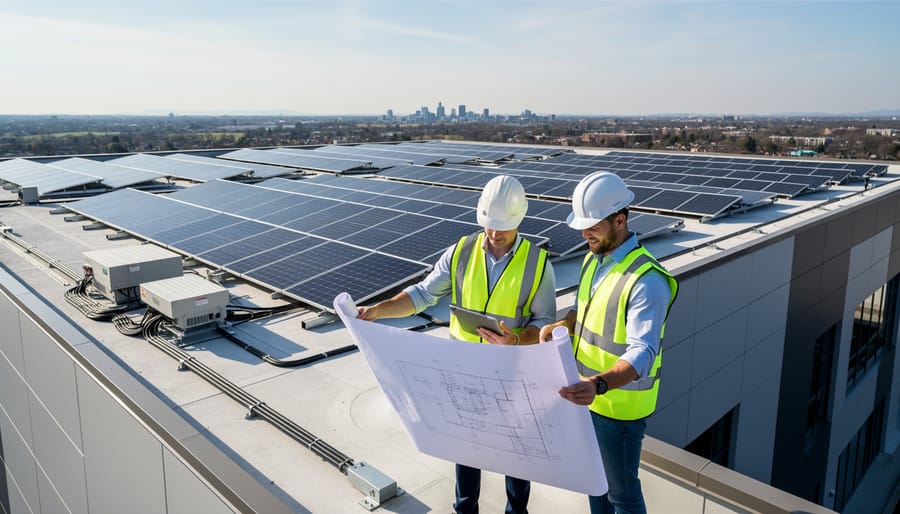
The Five Phases Where V Engineering Protects Your Investment
Requirements Analysis: Getting Your Energy Needs Right From Day One
Getting your solar system design right begins with understanding exactly what you need. During the requirements analysis phase, V systems engineering professionals dive deep into your specific situation rather than offering a one-size-fits-all solution. This crucial first step prevents costly mistakes and ensures your investment delivers maximum returns.
Professional engineers start by analyzing your historical energy bills to identify consumption patterns throughout the year. They look beyond simple averages to understand peak usage times, seasonal variations, and potential inefficiencies in your current energy habits. This data-driven approach ensures your system is sized precisely for your needs, avoiding the common pitfall of undersized installations that leave you still dependent on the grid or oversized systems that waste your capital.
The assessment includes several critical factors:
- Monthly and seasonal energy consumption patterns from utility bills
- Roof orientation, angle, and available surface area for panel placement
- Shading analysis throughout different times of day and year
- Budget constraints and available financing options
- Future energy needs including electric vehicles or home additions
Consider Sarah’s experience, a business owner who nearly purchased a standard residential package before proper analysis. Her engineer discovered her building’s west-facing roof received excellent afternoon sun, perfectly matching her peak business-hour energy demands. This insight allowed them to optimize panel placement for maximum offset during expensive peak-rate periods.
Financial goals receive equal attention during this phase. Engineers discuss whether you prioritize rapid payback, maximum energy independence, or environmental impact. They also factor in available incentives, tax credits, and utility net metering policies that significantly affect system specifications. This comprehensive evaluation creates a detailed specification document that guides every subsequent engineering decision, ensuring nothing is overlooked.
System Design: Matching Components to Your Specific Situation
After validating your energy requirements and site conditions, the engineering process shifts to selecting components that precisely match your specific situation rather than applying generic solutions. This is where V systems engineering truly differentiates itself from standard installation practices.
Think of it like tailoring a suit versus buying off the rack. A qualified systems engineer analyzes your validated data to determine the optimal panel type for your roof orientation and shading patterns, selects inverters sized correctly for your actual consumption patterns, and designs mounting systems appropriate for your specific structural conditions and local wind loads.
For example, a California business owner discovered through proper engineering that microinverters would serve their facility better than a single string inverter due to partial shading from nearby trees. This customized approach increased energy production by 23% compared to the standard system initially proposed by another contractor.
The configuration phase also addresses battery storage integration, future expansion capacity, and grid connection requirements specific to your utility provider. Engineers calculate string configurations, wire sizing, and circuit protection based on your actual installation conditions and local electrical codes, not standardized templates.
This tailored approach prevents the common problem of oversized or undersized systems that either waste your investment or fail to meet your needs, ensuring every component works together efficiently for your unique circumstances.
Integration Planning: Making Everything Work Together
Integration planning represents the moment where individual solar components transform into a cohesive, high-performing system. Think of it as the conductor ensuring every instrument in an orchestra plays in harmony. Without proper integration, even premium solar panels and inverters can underperform or create safety hazards.
The electrical integration phase demands meticulous attention. Engineers verify that voltage levels match across components, wire gauges handle expected loads with safety margins, and grounding systems meet code requirements. A common pitfall in rushed installations involves mismatched inverter specifications with panel output, reducing system efficiency by 15-20%.
Communication protocols between components matter tremendously for long-term performance. Modern solar systems rely on monitoring platforms that track production, detect anomalies, and alert owners to potential issues before they become costly problems. During integration planning, engineers confirm these systems speak the same language, whether through wired connections or wireless protocols.
Sarah Chen, a commercial property owner in Arizona, experienced this firsthand when her engineering team discovered incompatible monitoring hardware during integration planning. Catching this early prevented what would have been weeks of troubleshooting after installation. Her system now provides real-time data accessible from her smartphone, enabling quick responses to performance dips.
Proper integration planning ultimately protects your investment, ensuring maximum energy production and system longevity while providing the visibility needed for informed maintenance decisions.
Verification and Testing: Confirming Performance Before You Pay
Before you make your final payment, comprehensive testing ensures your solar system delivers exactly what was promised. In V systems engineering, verification happens at every stage, but the final testing phase is where everything comes together.
Think of it like a test drive before buying a car. Professional installers will measure actual energy output against projected performance, verify that safety systems engage properly, and confirm your panels communicate correctly with monitoring equipment. This systematic approach catches issues before they become your problem.
Sarah Mitchell, a solar engineering consultant with 15 years of experience, explains: “We’ve seen cases where systems passed visual inspection but produced 20% less power than expected. Proper verification testing would have caught wiring errors or incorrect inverter programming immediately.”
Your installer should provide documented test results showing your system meets specifications for energy production, electrical safety, grid connection standards, and monitoring accuracy. This documentation protects your investment and ensures warranty coverage. If testing reveals shortfalls, reputable installers address them before final payment, not after. This protecting step distinguishes engineered installations from basic setups and gives you confidence that your solar investment will perform as calculated for decades to come.
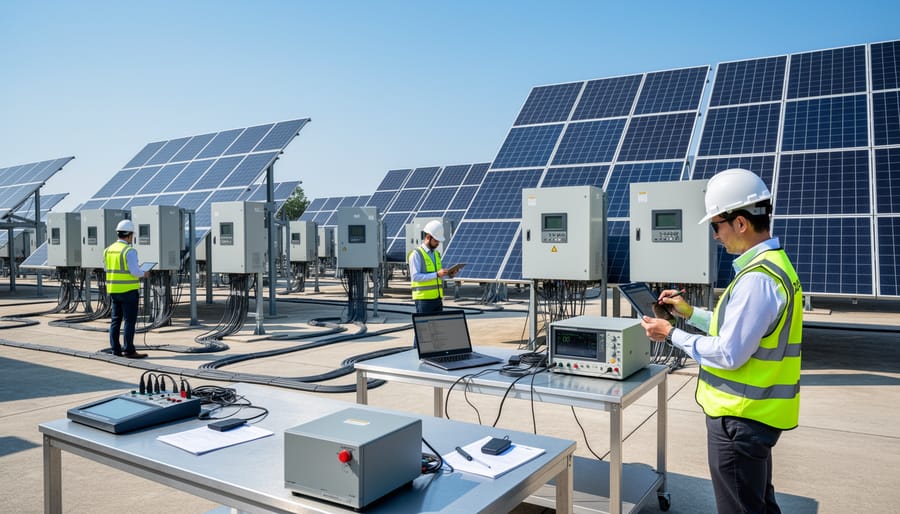
Validation: Proving It Works in Real-World Conditions
The validation phase is where engineering promises meet real-world performance. After your solar system is installed, this crucial step verifies that everything works as designed under actual conditions at your property. Rather than simply flipping the switch and hoping for the best, professional V systems engineering includes comprehensive testing and monitoring.
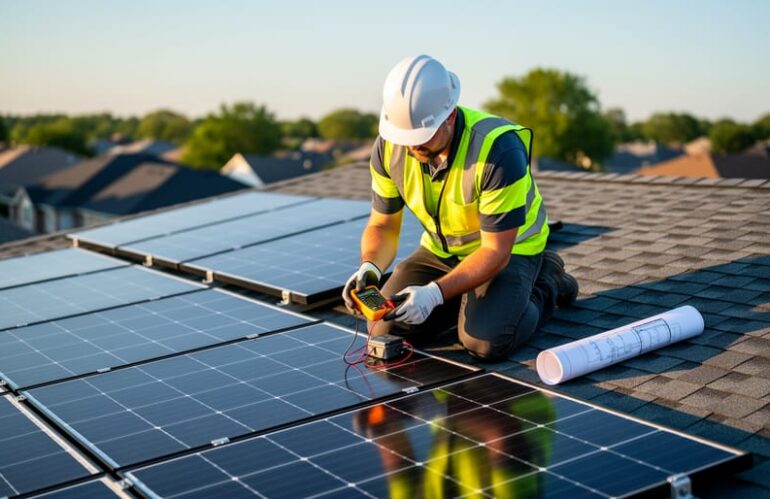
During validation, technicians measure actual energy production against predicted outputs, confirm that safety systems respond correctly, and verify that your monitoring tools provide accurate data. For homeowners, this means documented proof that your panels are generating the energy savings you were promised. Business owners receive detailed performance reports demonstrating return on investment timelines.
A commercial client in Arizona shared how validation testing revealed a minor inverter configuration issue that would have reduced output by 12 percent over time. Catching this during the validation phase saved thousands in lost energy production. Similarly, a residential installation in Colorado confirmed through validation that winter snow-shedding angles performed exactly as modeled, providing peace of mind for the homeowner.
Expert installers typically provide a validation report showing side-by-side comparisons of expected versus actual performance, creating a baseline for future monitoring. This documentation becomes invaluable for warranty claims and long-term maintenance planning, ensuring your investment delivers promised benefits for decades.
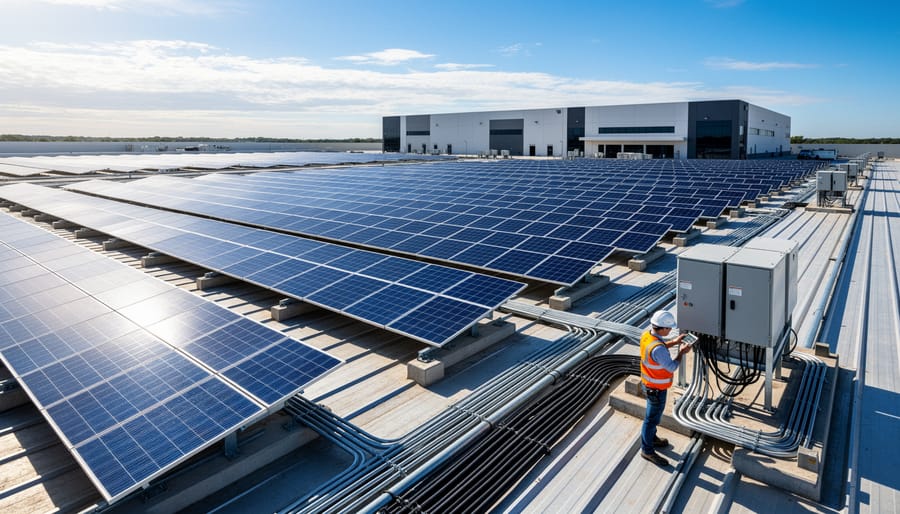
Real Success Stories: V Engineering in Action
Nothing demonstrates the value of V systems engineering quite like real-world results. Here are three success stories showing how this rigorous approach has transformed solar installations across different sectors.
A residential client in suburban Phoenix contacted a V engineering-focused solar provider after experiencing persistent performance issues with an existing system installed by another company. The original installation had never achieved the promised energy output, leaving the homeowner frustrated and financially stressed. The V engineering team conducted a comprehensive post-installation review, discovering that the system had been designed without proper consideration of seasonal shading patterns and roof ventilation requirements. By applying the V-model’s verification process, they identified mismatched inverter specifications and inadequate monitoring capabilities. After redesigning and reinstalling the system with proper engineering protocols, the homeowner saw a 34% increase in energy production and achieved payback period reduction of nearly two years. The lesson learned: upfront engineering investment prevents costly corrections later.
A commercial warehouse facility in New Jersey needed a 250-kilowatt solar array to reduce operating costs. Rather than accepting a standard proposal, the business owner selected a provider using V systems engineering methodology. During the requirements phase, engineers discovered that the building’s electrical infrastructure couldn’t support the initially proposed system size without expensive upgrades. By incorporating this discovery early in the design process, they developed an optimized phased installation approach that delivered 85% of the desired capacity while avoiding a 40,000 dollar electrical panel replacement. The facility achieved a 28% reduction in annual energy costs and received a detailed maintenance protocol based on the system’s specific configuration. The project was completed on schedule with zero change orders, demonstrating how thorough planning eliminates unexpected expenses.
An agricultural operation in California required solar power for irrigation pumps across 200 acres. The V engineering approach revealed critical details about power demand fluctuations during different growing seasons that a standard installation would have missed. Engineers designed a system with expandable capacity and battery storage integration points, allowing the farm to scale up as crop patterns evolved. Within 18 months, the operation expanded their solar capacity by 40% at minimal additional cost because the infrastructure had been properly planned. Annual energy savings exceeded 65,000 dollars, and the system’s modular design meant zero downtime during the expansion.
These examples illustrate how V systems engineering transforms solar installations from simple equipment placement into strategic, long-term energy solutions that deliver measurable financial and performance benefits.
The Hidden Costs of Skipping Proper Systems Engineering
When solar installations skip the systematic engineering approach, the consequences extend far beyond minor inconveniences. The financial and performance impacts can transform what should be a 25-year investment into an expensive disappointment.
One of the most common failures involves undersized systems that never meet energy expectations. A business owner in Arizona discovered this harsh reality when their hastily installed 50kW system only offset 60% of their electricity usage instead of the promised 90%. The culprit? The installer failed to account for seasonal variations and future business expansion, requiring an additional $35,000 investment just two years later to bridge the gap.
Component mismatches create another costly problem. Solar panels, inverters, and mounting systems must work together harmoniously. Without proper engineering analysis, you might end up with premium panels paired with an incompatible inverter that limits their output to 80% efficiency. It’s like putting high-performance tires on a car with worn-out brakes—the components fight against each other rather than working in harmony.
Safety issues pose the gravest concern. Improperly calculated structural loads have led to roof damage, particularly in regions with heavy snow or high winds. One homeowner faced $18,000 in repairs after their non-engineered installation damaged roof trusses that weren’t designed to handle the additional weight. Even more alarming, electrical misconfigurations can create fire hazards or violate building codes, putting families at risk.
- Engineered systems typically deliver 15-25% better long-term performance through optimized component matching.
- Proper engineering reduces maintenance costs by 40% over the system lifetime.
- Systematic approach ensures warranty validity and compliance with all safety codes.
- Total ROI improves by 20-30% despite slightly higher upfront costs.
- Non-engineered installations may appear 10-15% cheaper initially but cost significantly more over time.
- Lack of systematic design leads to 30-50% higher failure rates within first five years.
- Component mismatches often void manufacturer warranties, leaving owners unprotected.
- Undersized or poorly configured systems rarely achieve projected energy savings.
The warranty implications deserve special attention. Most solar equipment manufacturers require professional engineering documentation to honor warranties. Without it, you’re left covering repair costs yourself. Industry expert Michael Richardson notes, “We’ve seen thousands of dollars in legitimate warranty claims denied simply because the original installation lacked proper engineering specifications.”
How Strategic Financing Aligns with Engineered Systems
Here’s an often-overlooked truth: the quality of your solar system’s engineering directly impacts the financing options available to you. When lenders evaluate solar projects, they’re not just looking at your credit score—they’re assessing the likelihood that your system will perform as promised and generate the returns needed to make payments comfortable and predictable.
Systems designed using the V systems engineering approach create a compelling case for favorable financing terms. Why? Because proper engineering documentation demonstrates verified performance metrics, validated component compatibility, and tested system reliability. This comprehensive verification process gives lenders confidence that your solar installation won’t become a financial burden due to unexpected failures or underperformance.
Consider a recent commercial solar project in California where a business owner secured financing at 1.2% lower interest rates compared to standard offers. The difference? Their installer provided complete V-model documentation showing rigorous testing at each design phase, verified energy production calculations, and validated maintenance protocols. The lender recognized this meant lower risk and rewarded it with better terms.
The connection is straightforward: well-engineered systems produce predictable energy output, which translates to predictable savings and reliable return on investment. When your solar panels consistently perform as designed, your monthly utility savings remain stable, making loan or lease payments manageable within your budget. There’s no gambling on whether the system will deliver promised results.
Financial institutions increasingly recognize that engineered systems backed by thorough verification processes represent safer investments. They understand that systems tested against real-world conditions and validated before installation experience fewer performance issues, require less unexpected maintenance, and maintain their value throughout the financing period. This engineering rigor doesn’t just protect your investment—it unlocks better financial opportunities to make that investment in the first place.
Questions to Ask Your Solar Provider About Their Engineering Process
Before signing a contract with any solar provider, ask targeted questions that reveal whether they truly follow a systems engineering approach or simply install equipment. The answers you receive will help you distinguish between companies that prioritize long-term performance and those focused on quick installations.
Start by asking, “Can you walk me through your design verification process?” A company using genuine systems engineering will describe how they test and validate their design before installation begins. They should explain how they verify that each component works together as a complete system, not just list the equipment they’ll use. Look for mentions of shade analysis, electrical load calculations, and performance modeling specific to your property.
Next, inquire about their testing procedures: “What testing do you perform during and after installation?” Quality providers will detail commissioning tests, system performance verification, and safety checks. They should explain how they ensure the installed system matches the approved design. Red flags include vague responses or answers like “we just turn it on and see if it works.”
Ask about their requirements gathering process: “How do you determine my specific energy needs and goals?” Strong providers will discuss detailed energy audits, future consumption projections, and your long-term objectives. They should ask about potential changes like electric vehicle purchases or home additions. Companies that immediately quote a system size without understanding your needs are likely taking shortcuts.
What documentation will I receive about the engineering process?
You should receive detailed design specifications, load calculations, shading analysis reports, and equipment datasheets. Quality providers also supply commissioning reports and performance benchmarks.
How do you handle design changes during installation?
Professional companies follow a formal change management process that re-validates the entire system when modifications occur. Avoid providers who make on-the-fly changes without documentation or review.
Who reviews and approves your system designs?
Look for companies where licensed professional engineers review all designs. Single-person approval or no formal review process indicates inadequate quality control.
What performance guarantees do you offer?
Systems engineering-focused companies typically guarantee specific energy production levels based on their validated models. They should explain how they calculated these projections and what happens if performance falls short.
Finally, ask about long-term support: “What monitoring and maintenance programs do you offer?” Companies confident in their engineering approach provide comprehensive monitoring systems and proactive maintenance plans, demonstrating their commitment to sustained performance rather than just completing the installation and moving on.

Choosing solar energy is an investment in your future, but the difference between a solar system that delivers on its promise and one that underperforms often comes down to one crucial factor: V systems engineering. Throughout this article, we’ve explored how this methodical approach transforms solar installations from simple product placements into carefully designed, integrated energy solutions.
The distinction matters more than you might think. A basic installation focuses on getting panels on your roof as quickly as possible. V systems engineering, however, ensures every component works together harmoniously, anticipates potential issues before they arise, and validates performance at each stage. This comprehensive methodology protects your investment from the costly problems that plague many solar systems: premature equipment failure, disappointing energy production, and expensive corrective measures down the line.
Consider the story of the Martinez family, who initially chose the lowest-bid installer only to experience persistent inverter problems and production shortfalls. After switching to an engineering-focused provider who redesigned their system using V model principles, their energy production increased by 34 percent, and they haven’t experienced a single service call in three years. That’s the peace of mind engineered solutions provide.
When evaluating solar providers, look beyond installation credentials. Ask about their design process, verification methods, and long-term performance guarantees. A company that emphasizes comprehensive system designing and integration services demonstrates commitment to your success, not just a quick sale.
Your solar investment deserves the longevity, reliability, and optimal performance that only proper engineering can deliver. Don’t settle for merely installed when you can have expertly engineered. The long-term value, both financial and environmental, makes all the difference.