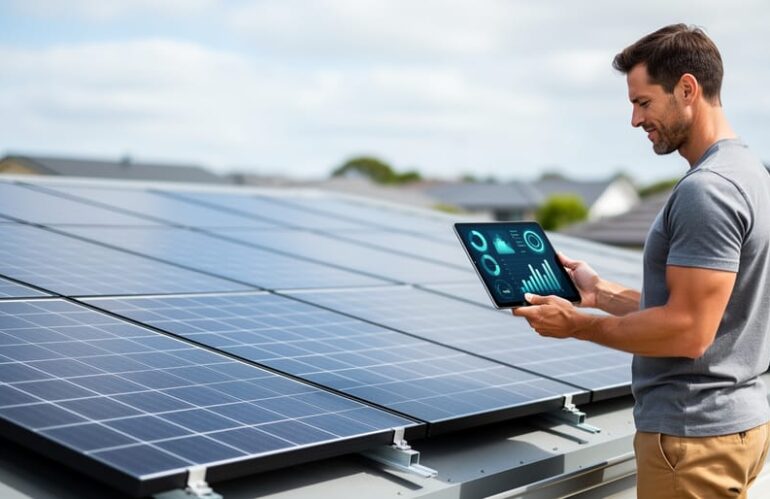
An effective energy strategy is a comprehensive plan that assesses your current energy consumption, establishes clear renewable energy goals, and outlines the specific steps needed to transition from traditional power sources to sustainable alternatives like solar, wind, or hybrid systems. For most homeowners and businesses, developing a sound energy strategy takes 2-4 weeks of data collection and analysis, followed by 6-18 months of phased implementation depending on the scale of the project and financing arrangements.
The process works because it removes guesswork and prevents the costly mistakes that occur when people rush into renewable energy adoption without understanding their baseline usage patterns, available incentives, or return-on-investment timelines. A structured approach ensures you select appropriately sized systems, capitalize on federal and state tax credits, and sequence upgrades in a way that maximizes financial benefits while minimizing disruption to your operations.
In 2026, energy strategy development has become increasingly accessible thanks to improved data analytics tools, declining solar panel costs, and expanded financing options that make renewable transitions feasible for properties of all sizes. Business owners who implemented formal energy strategies in recent years report average energy cost reductions of 40-65% within the first three years, with many achieving complete energy independence by year five.
The key difference between successful and disappointing renewable energy projects often comes down to planning. Properties that skip the strategy phase frequently end up with mismatched equipment, missed rebate opportunities, and performance that falls short of projections. Those who invest time upfront in developing a clear roadmap consistently outperform expectations and recoup their investment faster than industry averages suggest.
Understanding Energy Strategies for Solar Implementation
Energy strategies for solar implementation form the foundation of successful renewable energy adoption. At its core, an effective energy strategy involves four interconnected components: a thorough analysis of your current energy consumption patterns, clearly defined objectives for cost reduction and sustainability, careful selection of appropriate solar technologies, and a realistic timeline that sequences each implementation phase. This strategic approach transforms solar adoption from a simple product purchase into a comprehensive plan that aligns technology choices with your specific energy needs and financial goals.
The scope and complexity of energy strategies vary significantly across different applications. Residential strategies typically focus on offsetting household consumption, reducing monthly utility bills, and achieving energy independence during peak rate periods. A homeowner might prioritize battery storage for backup power during outages or size their system to eliminate summer air conditioning costs. Commercial energy strategies, by contrast, must account for demand charges, complex rate structures, and business operating hours that create distinct consumption patterns. A retail store with daytime-only operations benefits from different solar configurations than a 24-hour manufacturing facility. Industrial strategies introduce additional layers, including process-specific energy requirements, power quality considerations, and opportunities to integrate solar with existing energy management systems.
Strategic planning delivers measurable financial advantages beyond simple energy bill reduction. Businesses that develop comprehensive energy strategies before installing solar typically achieve 15-30% better returns on investment compared to those making ad hoc technology decisions. This improvement stems from right-sizing systems to actual needs, capturing available incentives, selecting optimal financing structures, and avoiding costly mid-project changes. The sustainability benefits compound these financial gains. A well-designed energy strategy reduces carbon emissions more effectively by addressing both supply (through solar generation) and demand (through efficiency improvements), creating environmental impact that extends far beyond what solar panels alone can achieve.
Tools and Materials for Energy Strategy Development
Developing a robust energy strategy requires gathering the right tools and data before you begin planning. Having these resources in place ensures your strategy is grounded in accurate information and realistic projections rather than guesswork.
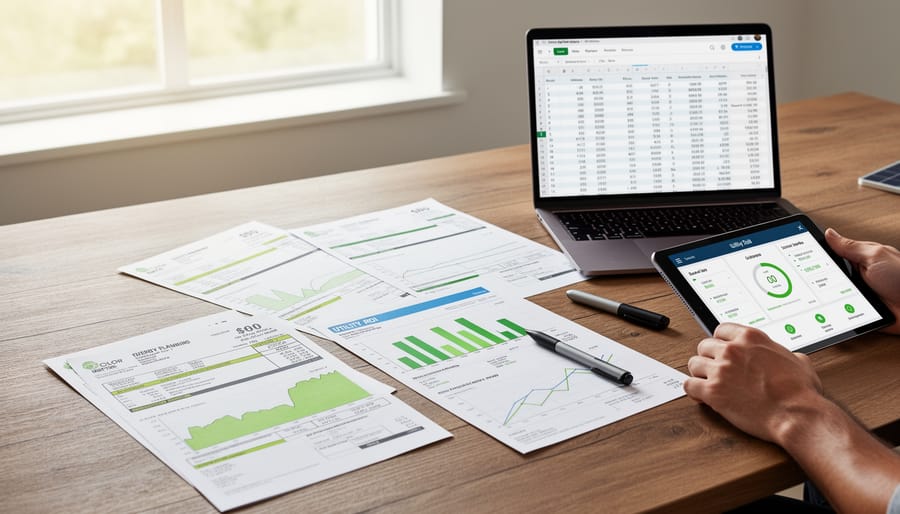
Start by collecting your energy consumption data from the past 12 to 24 months. These utility bills reveal seasonal patterns, peak usage times, and monthly costs that form the foundation for sizing your solar system correctly. Without this historical record, you risk over-designing an expensive system or under-sizing one that fails to meet your needs.
Energy audit tools help you identify where your power goes. Basic tools include plug-in energy monitors for individual appliances, while comprehensive audits may use thermal imaging cameras to detect insulation gaps that waste energy. Many utilities offer free or subsidized professional audits that provide detailed reports on consumption patterns and efficiency opportunities.
Before moving forward, assemble these essential planning resources:
- 12-24 months of utility bills showing consumption in kilowatt-hours (kWh) and costs
- Energy audit equipment or professional audit report identifying usage patterns
- Site assessment tools including sun path calculators, shade analysis apps, and roof measurement devices
- Solar sizing calculators specific to your region’s sunlight exposure
- Financial modeling software or spreadsheets for ROI and payback calculations
- Access to certified solar professionals for system design consultation
Solar calculators translate your consumption data into system size recommendations based on your location’s solar resource. These tools account for factors like roof orientation, tilt angle, and local weather patterns. The National Renewable Energy Laboratory’s PVWatts calculator is a trusted free resource.
Financial modeling software helps you compare different scenarios: buying versus leasing, various loan terms, and the impact of available incentives. Even a basic spreadsheet template can track upfront costs against projected savings over 25 years.
Professional consultation brings expertise that DIY tools cannot replicate. Certified solar designers evaluate your specific site conditions, local codes, and utility interconnection requirements. Their experience prevents costly mistakes and identifies opportunities you might miss.
Safety and Compliance Considerations
Developing energy strategies that incorporate solar systems requires careful attention to safety protocols and regulatory compliance from the outset. Electrical work carries inherent risks, so understanding these requirements before you begin protects both people and your investment.
Start with electrical safety fundamentals. Solar installations connect to your existing electrical panel and utility grid, creating potential hazards if improperly handled. The National Electrical Code (NEC) sets minimum safety standards for photovoltaic systems, including proper grounding, disconnects, overcurrent protection, and conductor sizing. Your local jurisdiction may enforce additional requirements beyond NEC baseline standards.
Building codes govern structural modifications, roof penetrations, and system mounting. Your strategy must account for permitting timelines, which vary significantly by location but typically add two to eight weeks to project schedules. Submit permit applications early with detailed system plans, structural calculations, and electrical diagrams prepared by licensed professionals.
Utility interconnection agreements formalize how your solar system connects to the grid. These contracts specify technical requirements, safety equipment like anti-islanding protection, and net metering terms. The approval process takes anywhere from a few weeks to several months depending on your utility’s workload and local regulations.
Insurance considerations deserve strategic attention. Notify your property insurer about the solar installation, some policies automatically cover added equipment value while others require riders. Verify your contractor carries adequate liability and workers’ compensation coverage. Additionally, confirm equipment warranties cover both manufacturing defects and installation workmanship.
Working with NABCEP-certified installers and licensed electricians ensures compliance with evolving 2026 regulations while maintaining safety throughout your energy strategy implementation.
Step-by-Step Process for Developing Your Energy Strategy
Step 1: Conduct a Comprehensive Energy Audit
Start by gathering 12 to 24 months of utility bills to understand your actual energy consumption and costs. These bills reveal seasonal patterns, peak usage periods, and how much you’re paying per kilowatt-hour, essential baseline data for any energy strategy.
Next, identify when you use the most electricity. Note daily peak times (typically mornings and evenings for homes, business hours for commercial properties) and seasonal variations. Summer air conditioning or winter heating often drive the highest consumption. This timing data helps size your solar system appropriately and determines whether battery storage makes financial sense.
Walk through your property to spot energy waste. Look for inefficient lighting, outdated HVAC systems, poor insulation, or equipment running unnecessarily. An infrared camera or professional energy auditor can reveal hidden issues like air leaks or inadequate weatherization. Many utility companies offer free or subsidized audits.
Calculate your baseline metrics: average monthly kWh usage, peak demand charges (for commercial properties), and total annual energy costs. Break these down by category if possible, lighting, heating, cooling, appliances, or processes. These numbers become your measuring stick for evaluating solar system performance and tracking savings over time.
Document everything in a simple spreadsheet or energy management tool. Clear baseline data transforms your energy strategy from guesswork into a calculated plan with measurable ROI.
Step 2: Define Clear Energy Goals and Priorities
After identifying your energy consumption patterns in Step 1, translate that data into concrete objectives. Effective goals are specific and measurable, not vague aspirations like “save money” or “go green.”
Start with quantifiable targets. Aim for 50% energy independence by offsetting half your grid consumption, or set a 30% cost reduction within the first year. For environmental focus, calculate your current carbon footprint and target a specific reduction, say 15 tons of CO₂ annually. If outages threaten your operations, define backup power needs: how many hours of battery storage for which critical loads?
Separate short-term wins from long-term vision. A short-term goal might reduce peak-demand charges within six months by shifting consumption patterns. Long-term objectives could include 100% renewable operation by 2028 or eliminating grid reliance entirely. This distinction helps you phase installations strategically rather than overextending upfront.
Prioritize based on what matters most to you: immediate cash flow, resilience, sustainability metrics, or property value. Competing goals require trade-offs, maximum savings may mean skipping battery storage initially, while backup power demands upfront investment that extends payback periods.
Write down three to five specific goals with numbers and deadlines. These become the yardstick for evaluating every technology choice and financing option ahead.
Step 3: Evaluate Solar System Options and Technologies
After clarifying your goals and priorities, match them to the right solar technologies. Your energy strategy succeeds or fails based on how well your system fits your specific needs and site characteristics.
Start with solar panel selection. Monocrystalline panels offer higher efficiency (20-22%) and work best for limited roof space or maximum power generation. Polycrystalline panels cost less upfront but require more area for equivalent output. For commercial installations or challenging roof angles, bifacial panels can capture reflected light from below, boosting production by 10-20% in the right conditions.
Inverter choice directly impacts system performance and monitoring capabilities. String inverters suit simple roof layouts with minimal shading, while microinverters optimize each panel independently, critical if trees or nearby buildings create shade patterns throughout the day. Your site assessment from Step 1 reveals which approach maximizes your return.
Battery storage makes sense when your strategy prioritizes energy independence, backup power during outages, or storing excess production for evening use. Calculate whether your time-of-use rates justify storage costs. A home aiming for 80% energy independence needs different capacity than one seeking occasional backup power.
System sizing requires matching production capacity to your consumption patterns and expansion plans. Oversize slightly if you expect electric vehicle charging or business growth within five years. Your financial model from the next step will confirm whether the added capacity justifies the investment today versus future expansion costs.
Step 4: Develop Financial Models and Explore Financing
Calculate your return on investment by dividing total lifetime savings by your upfront costs after incentives. For a typical residential system costing $15,000 after the federal tax credit, producing $1,200 in annual savings yields an ROI of 8% in year one, climbing as electricity rates increase. Payback periods for well-designed systems now average 6-8 years for homeowners and 4-6 years for commercial installations with accelerated depreciation benefits.
Build your financial model by projecting 25 years of energy production against rising utility rates (historically 3-4% annually). A $20,000 system saving $1,500 yearly at current rates typically generates $60,000-$75,000 in lifetime value when accounting for rate escalation.
Strategic financing transforms solar from a large capital expense into a manageable monthly investment. Solar loans preserve ownership and tax benefits while requiring no money down in many cases. Power purchase agreements eliminate upfront costs entirely, you pay only for the energy produced at a predetermined rate below utility prices. Leases offer similar zero-down benefits with fixed monthly payments instead of per-kilowatt-hour charges.
For 2026, stack the 30% federal Investment Tax Credit with state and local rebates. Many states offer additional incentives ranging from $500-$3,000, while utilities provide performance-based payments for energy fed back to the grid. Commercial projects benefit from MACRS depreciation, recovering costs faster. A $50,000 commercial system can see effective costs drop to $28,000 after combining federal credits, state rebates, and five-year depreciation schedules.
Step 5: Create an Implementation Timeline
Creating a realistic implementation timeline prevents costly delays and ensures your energy strategy stays on track. Start by working backward from your desired completion date, accounting for each phase: initial design (1-2 weeks), permitting and approvals (4-8 weeks for residential, 8-16 weeks for commercial), equipment procurement (2-4 weeks), and actual installation (3-5 days for residential, 2-6 weeks for commercial projects).
Coordinate early with your solar contractor to identify potential scheduling conflicts and secure permit appointments. Commercial projects require additional time for utility interconnection agreements and, in some cases, board approvals or shareholder meetings. Schedule inspections immediately after installation milestones rather than waiting until project completion.
For businesses, plan installations during low-demand periods or in phases to avoid operational disruptions. Residential timelines are more flexible but should account for seasonal weather patterns that might delay roof work. Build in 15-20% buffer time for unexpected permitting questions or equipment delivery delays. Document all milestone dates and establish weekly check-ins with your installation team to address issues before they cascade into major setbacks.
Step 6: Partner with Qualified Solar Professionals
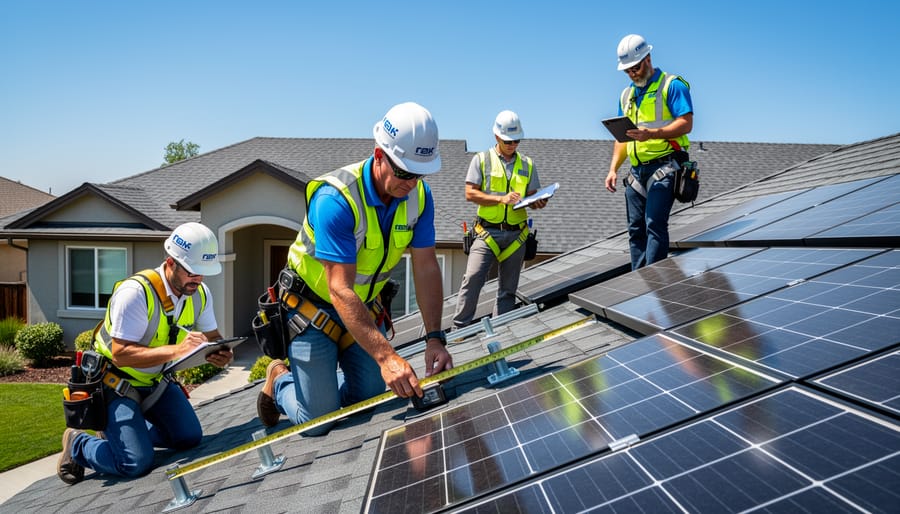
Selecting the right solar professional is crucial to executing your energy strategy effectively. Start by verifying that installers hold current certifications from the North American Board of Certified Energy Practitioners (NABCEP) or equivalent credentials in your region. Request proof of licensing, insurance, and bonding, then check their track record through online reviews and Better Business Bureau ratings.
When reviewing proposals, compare more than just price. Evaluate equipment specifications, warranty coverage, projected performance based on your energy strategy goals, and post-installation support services. Ask candidates how they’ve handled projects similar to yours and request references you can contact directly.
Essential questions to ask potential partners include: How will you customize the system to meet my specific energy strategy objectives? What monitoring tools do you provide? How do you handle permitting and utility interconnection? What’s your typical project timeline? Who will I communicate with throughout the process?
Establish clear expectations upfront about communication frequency, project milestones, and decision-making protocols. A qualified professional should demonstrate expertise in translating your energy strategy into an optimized solar solution while maintaining transparency throughout the installation process.
Verification and Performance Monitoring
Once your solar system is operational, verification ensures your energy strategy delivers the promised results. Start with formal system commissioning, a professional inspection that confirms all components function correctly, inverters communicate properly, and safety mechanisms work as designed. This initial testing establishes your performance baseline.
Install a comprehensive monitoring system that tracks real-time data. Modern solar platforms provide detailed dashboards showing energy production by hour, day, and month alongside consumption patterns. Many systems send alerts when production drops unexpectedly, allowing you to address issues before they significantly impact savings.
Track these key performance indicators quarterly and annually:
- Total kilowatt-hours produced versus projections
- Energy consumption reduction compared to pre-solar baseline
- Actual utility cost savings versus financial model estimates
- System capacity factor (actual output versus theoretical maximum)
- Battery state of health and cycling efficiency (if applicable)
Compare actual performance against your energy strategy goals every three months. If production falls short by more than 10%, investigate potential causes, shading from tree growth, panel soiling, or equipment degradation. Weather variations are normal, but consistent underperformance signals a problem requiring attention.
Review financial metrics annually. Calculate your actual ROI and payback timeline based on real utility bills. If savings lag projections, reassess whether consumption patterns have changed or utility rate structures have shifted. This data informs strategy adjustments, perhaps adding panels to meet increased demand or upgrading to a time-of-use rate plan that maximizes solar value.
Document maintenance activities and their impact on performance. Clean panels typically produce 5-15% more energy, validating the cost of regular cleaning services. This ongoing verification process transforms your energy strategy from a static plan into a living framework that adapts to deliver maximum long-term value.
Common Energy Strategy Mistakes to Avoid
Even well-intentioned solar adopters make predictable errors when developing energy strategies. Recognizing these pitfalls early saves you time, money, and frustration.
Underestimating Future Energy Needs
Many homeowners and businesses size their solar systems based solely on current consumption, forgetting that energy use typically grows. If you plan to add electric vehicles, expand your business operations, or install heat pumps, your energy demand will increase. Build a 20-30% growth buffer into your strategy from the start, or ensure your system design allows for straightforward expansion.
Ignoring Maintenance and Replacement Costs
Your energy strategy must account for ongoing expenses, not just installation costs. Inverters typically need replacement after 10-15 years, panels require periodic cleaning, and monitoring systems need upkeep. Factor these expenses into your financial projections, or your actual ROI will fall short of expectations.
Chasing the Lowest Upfront Price
Choosing a solar system based purely on initial cost often backfires. Premium equipment delivers better efficiency, longer warranties, and superior performance over decades. A system that costs 15% more upfront but produces 20% more energy over its lifetime represents smarter strategy.
Skipping Energy Efficiency First
Installing solar before addressing inefficiencies wastes money. Fix air leaks, upgrade insulation, and replace outdated appliances before sizing your system. You’ll need fewer panels to meet reduced demand, lowering your total investment while maximizing returns. Strategic energy planning always starts with conservation, then adds generation.
Success Story: Commercial Energy Strategy in Action
Denver Manufacturing Solutions faced mounting energy costs that were eroding profit margins across their 85,000-square-foot facility. In early 2025, leadership committed to developing a comprehensive energy strategy rather than simply reacting to rising utility bills.
Their process began with a detailed energy audit revealing that peak production hours coincided with the highest electricity rates. The company set clear goals: reduce energy costs by 40% within three years and achieve 75% energy independence during daylight operations.
After evaluating options, they chose a 250kW rooftop solar system with battery storage to shift grid consumption to off-peak hours. Financial modeling showed a 6.2-year payback with $1.2 million in projected savings over 20 years. They secured a commercial solar loan that kept monthly payments below current utility costs.
The implementation timeline spanned eight months, including permit approvals and coordination to minimize production disruptions. Installation occurred during scheduled maintenance windows, and the facility remained fully operational throughout.
Results exceeded expectations. First-year energy costs dropped 38%, and the battery system provided backup power during two grid outages that would have halted production. Carbon emissions decreased by 180 tons annually, equivalent to removing 39 cars from the road.
The company now updates its energy strategy quarterly, using real-time monitoring data to optimize consumption patterns. Their strategic approach transformed energy from a fixed cost into a competitive advantage, freeing capital for equipment upgrades and workforce expansion.
Frequently Asked Questions About Energy Strategies
How long does developing an energy strategy take?
For a residential property, expect 2-4 weeks from initial audit to finalized plan, including site assessment and financial modeling. Commercial and industrial strategies typically require 4-8 weeks due to greater complexity, multiple stakeholder input, and detailed load analysis.
Can I develop an energy strategy myself, or do I need professional help?
You can handle initial steps like gathering utility bills and setting basic goals independently. However, partnering with certified solar professionals ensures accurate system sizing, proper financial modeling, compliance with regulations, and access to the latest incentive programs, ultimately saving time and preventing costly mistakes.
How often should I update my energy strategy?
Review your strategy annually to account for changes in energy consumption patterns, utility rates, and available technologies. Major life events like home additions, new equipment purchases, or business expansions warrant immediate strategy updates to maintain optimal performance and savings.
What’s the main difference between residential and commercial energy strategies?
Residential strategies focus on household consumption patterns, roof space, and individual financial goals with simpler payback calculations. Commercial strategies address higher energy demands, demand charges, operational schedules, tax implications, and often involve multiple decision-makers and more complex financing structures.
Can I integrate solar with my existing energy efficiency measures?
Absolutely, combining solar with efficiency upgrades like LED lighting, HVAC improvements, and insulation creates the most effective strategy. Implementing efficiency measures first reduces your baseline energy needs, which means you can install a smaller, less expensive solar system while achieving greater overall savings.
These questions reflect the real concerns property owners face when beginning the strategic planning process. The timeline question matters because many assume energy strategy development happens overnight, when thoughtful analysis actually requires several weeks to get right. The DIY versus professional question acknowledges that while you can start the process independently, expert guidance becomes invaluable for technical decisions and maximizing financial returns.
The update frequency question addresses long-term strategy management, your energy needs aren’t static, and neither should your plan be. Technology advances, incentives change, and your consumption patterns shift over time. The residential versus commercial distinction helps readers understand that while core principles remain consistent, the complexity and stakeholders involved differ significantly between property types.
Finally, the integration question recognizes that many property owners already have some efficiency measures in place or are considering them alongside solar. The answer reinforces that energy strategies work best as holistic approaches rather than isolated solar installations, and that efficiency improvements actually enhance solar investment returns by reducing the system size needed.
Developing effective energy strategies transforms solar from a simple purchase into a long-term investment that delivers measurable returns. Throughout this guide, you’ve seen how systematic planning, from conducting energy audits to selecting the right technologies and financing, creates a roadmap that cuts costs, maximizes solar ROI, and advances your sustainability objectives. Strategic planning helps you avoid expensive mistakes, ensures your system matches your actual needs, and positions you to adapt as your energy requirements evolve.
The difference between a mediocre solar outcome and an exceptional one often comes down to the strategy behind it. Homes and businesses that invest time upfront in comprehensive energy strategy development see faster payback periods, higher performance, and greater long-term savings.
Your first step is straightforward: conduct an energy audit to understand your current consumption patterns and identify opportunities. From there, Jumping Cable Solar Homes can guide you through every phase of the process. Our team brings proven expertise in energy strategy development, helping clients design solutions that align technical capabilities with financial goals and environmental values. We’ll work with you to build a customized strategy, connect you with qualified professionals, and ensure your solar investment delivers the results you expect.
As energy costs rise and climate concerns intensify in 2026 and beyond, strategic energy planning will become even more essential. Those who act now with a clear, well-executed strategy will be positioned to reap the benefits for decades to come.